Modern request execution
HTTP, GraphQL, gRPC (unary + all streaming modes), WebSocket, SOAP 1.1/1.2. Per-request retry, timeout, and a connection timeline.
HTTP/2gRPC-WebmTLS

Native binary. Local-first. Zero telemetry. MIT-licensed. A Bruno-class engine with enterprise polish — HTTP, GraphQL, gRPC, SOAP, native git, secret-manager bindings, and OAuth2 in the system browser.
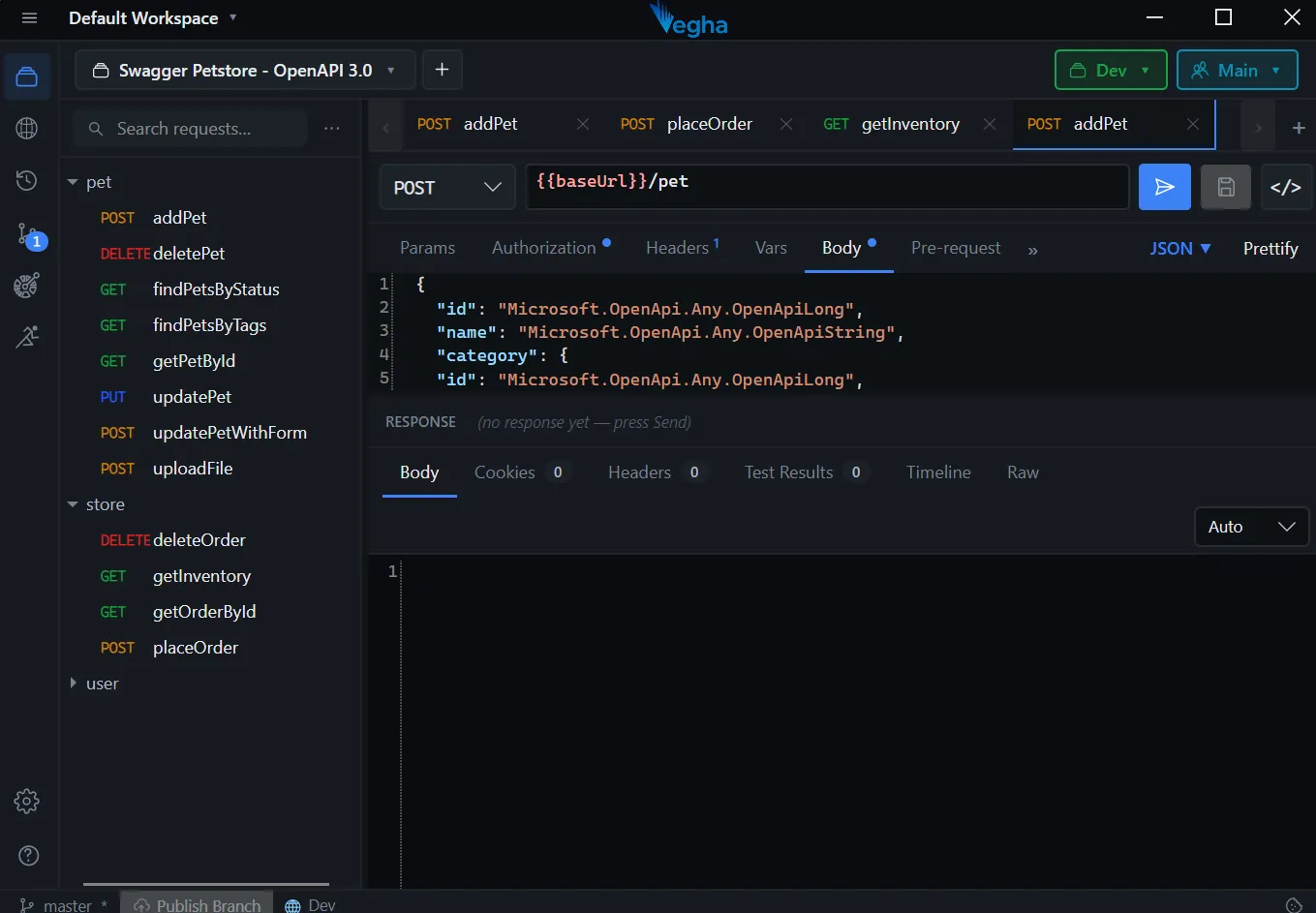
Vegha runs entirely on your machine. Your collections live in plain-text files inside a folder you choose — commit them, branch them, review them like any other code.
HTTP, GraphQL, gRPC (unary + all streaming modes), WebSocket, SOAP 1.1/1.2. Per-request retry, timeout, and a connection timeline.
Bearer, Basic, Digest, OAuth1, OAuth2 (PKCE, client-credentials, password), AWS SigV4, NTLM, WSSE, mTLS — fourteen methods in all.
Reference secrets inline with secret://. Azure Key Vault and AWS Secrets Manager today; Vault, GCP, Doppler, 1Password and Conjur on the roadmap.
Init, clone, branch, stage, commit, push, pull, stash. A real three-pane merge-conflict resolver. Backed by LibGit2Sharp — no external git required.
Pre-request and post-response scripts run in a sandboxed JS engine. Hard limits on memory, time, recursion. No filesystem, no process access. Ever.
Human-readable Bruno-style .bru files in a folder. Diff them. Review them. Import from Bruno, Postman, Insomnia, or any OpenAPI 3.x / Swagger 2.0 spec.
Built on Avalonia + .NET 10. Boots in under a second. Stays responsive with thousands of requests open. Memory footprint a fraction of Electron rivals.
The same engine runs in your terminal and your CI. vegha run a collection, export results, fail your build on broken contracts.
No analytics. No crash reporting. No phone-home. The only outbound traffic is what you explicitly send. Audit the source on GitHub.
Branch a request the way you'd branch a feature. Open a PR on a payload change.
Resolve merge conflicts with a real three-pane editor.
The git engine is built in — there's no git binary to install.
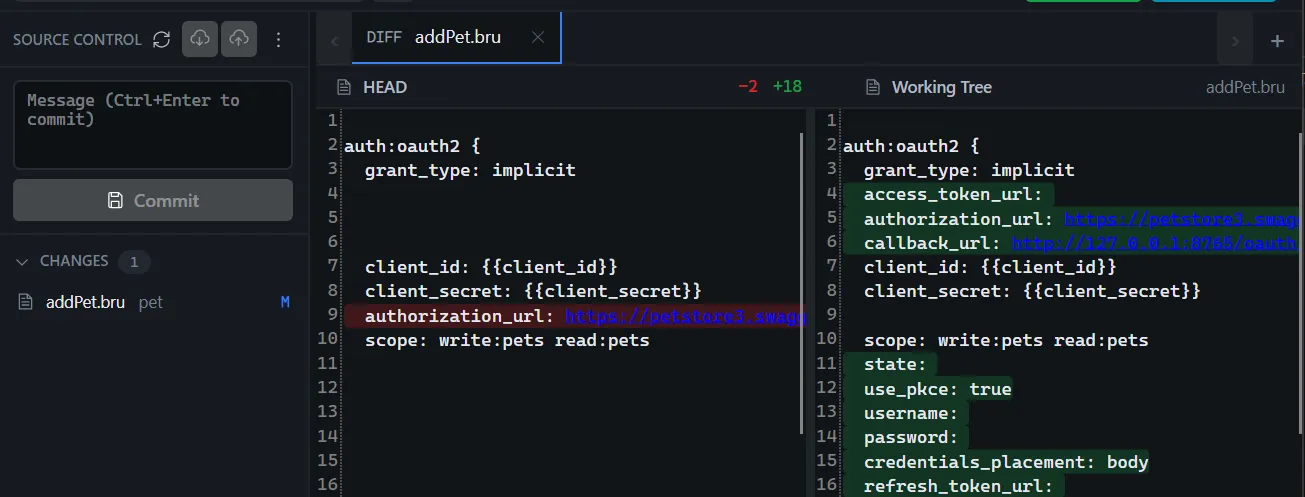
OAuth2 in Vegha opens your real browser — the one with your password manager, your MFA token, your SSO cookies. A loopback listener receives the callback. The token is cached locally, encrypted with your OS keystore.
Vegha is requesting access to:
Redirect to http://127.0.0.1:53241/callback
Vegha will receive the code and exchange it locally.
The desktop UI and the vegha CLI share one core engine.
Run a collection from the GUI, pin the pass — then drop it into GitHub Actions
with the exact same files and the exact same results.
Every build ships with auto-update via Velopack. No account, no sign-in.
macOS 12 Monterey or later · signed & notarized
Windows 10 or later · also on the Microsoft Store
Ubuntu 22+, Fedora 38+, Arch · x86_64
Vegha is free, MIT-licensed, and built to last. Get the desktop app and the CLI — no account required.